Your First Project: How to lead confidently even as a new PM
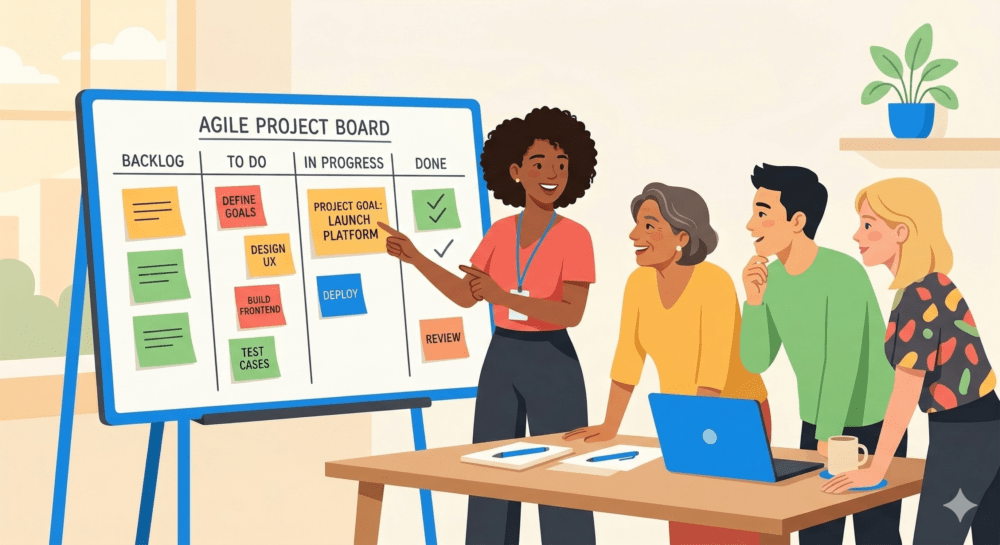
Stepping into your first project as a Project Manager can feel like standing at the entrance of a busy marketplace — lots of movement, lots of voices, and everyone already seems to know where they’re going. Your role isn’t to know everything on day one. Your role is to bring direction, calm, and coordination so the team can do their best work.
Leadership in Agile isn’t about being the expert in every task. It’s about helping people stay aligned, removing confusion, and creating an environment where progress feels possible. Whether you’re in a tech startup, a hospital department, a charity office, or a local council team, the principles are the same: guide the work, support the people, and keep the goal visible.
1. Lead With Purpose, Not Pressure
Confidence doesn’t come from pretending you have all the answers. It comes from understanding the purpose of the project.
Before you lead anything, get clear on:
- What problem the project is solving
- Who benefits from the work
- What outcome the team is aiming for
When you know the purpose, you can make decisions more easily. Purpose gives you direction, and direction builds confidence.
2. Learn the Landscape Before You Take Action
Every team has its own habits, tools, and ways of communicating.
Spend time understanding:
- How work is currently organised
- How people prefer to communicate
- What tools the team uses (even if it’s just sticky notes or spreadsheets)
- What challenges the team already knows about
This is the same approach you’d take when joining a new community group or helping in a family business — you observe first, then support.
3. Break the Project Into Clear, Achievable Pieces
A strong PM doesn’t overwhelm the team with long documents or complicated plans. They make the work feel manageable.
You can do this by:
- Listing the key tasks
- Grouping related tasks together
- Highlighting what must happen first
- Keeping everything visible on a simple board
Small steps reduce stress. Small steps create momentum. Small steps help everyone feel capable.
4. Build Trust Through Everyday Actions
Trust is built through consistency, not authority.
You build trust when you:
- Follow through on what you said you’d do
- Communicate in a straightforward, human way
- Ask questions instead of making assumptions
- Treat everyone’s input with respect
- Stay steady when plans shift
Teams trust PMs who make work easier, not heavier.
5. Guide the Team Through the Project Without Taking Over
Your job is to coordinate, not control.
You support the team by:
- Keeping the goal visible
- Helping prioritise tasks
- Checking in regularly
- Removing obstacles
- Encouraging collaboration
- Making sure progress is shared openly
Think of yourself as the person who keeps the path clear so the team can move forward without tripping.
6. What Confident Leadership Looks Like in Real Organisations
In a hospital:
You help nurses, admin staff, and clinicians stay aligned on improving a patient process.
In a charity:
You coordinate volunteers, tasks, and deadlines for a community programme.
In a tech startup:
You help developers and designers stay focused on the next small feature.
In a school or youth centre:
You organise tasks for an event, workshop, or learning activity.
Leadership looks different in every environment, but the foundation is the same: clarity, support, and steady communication.
Practical Application (Walk‑Through Together)
Imagine your first project is to improve how a team handles customer questions.
Here’s how you might lead:
- Understand the purpose: “We want customers to get answers faster.”
- Break the work down:
- Review current response times
- Identify common issues
- Suggest improvements
- Test a new process
- Support the team: Keep tasks organised. Check in regularly. Remove blockers.
- Review the outcome: Did response times improve? What feedback did customers give? What should the team adjust next?
This is confident leadership — practical, steady, and focused on progress.
Your Activity
Write down:
- A simple project you could lead (real or hypothetical)
- Why the project matters
- Three tasks that would move it forward
- One behaviour you will use to build trust with your team
This helps you practise leadership in a grounded, realistic way.