Writing user stories
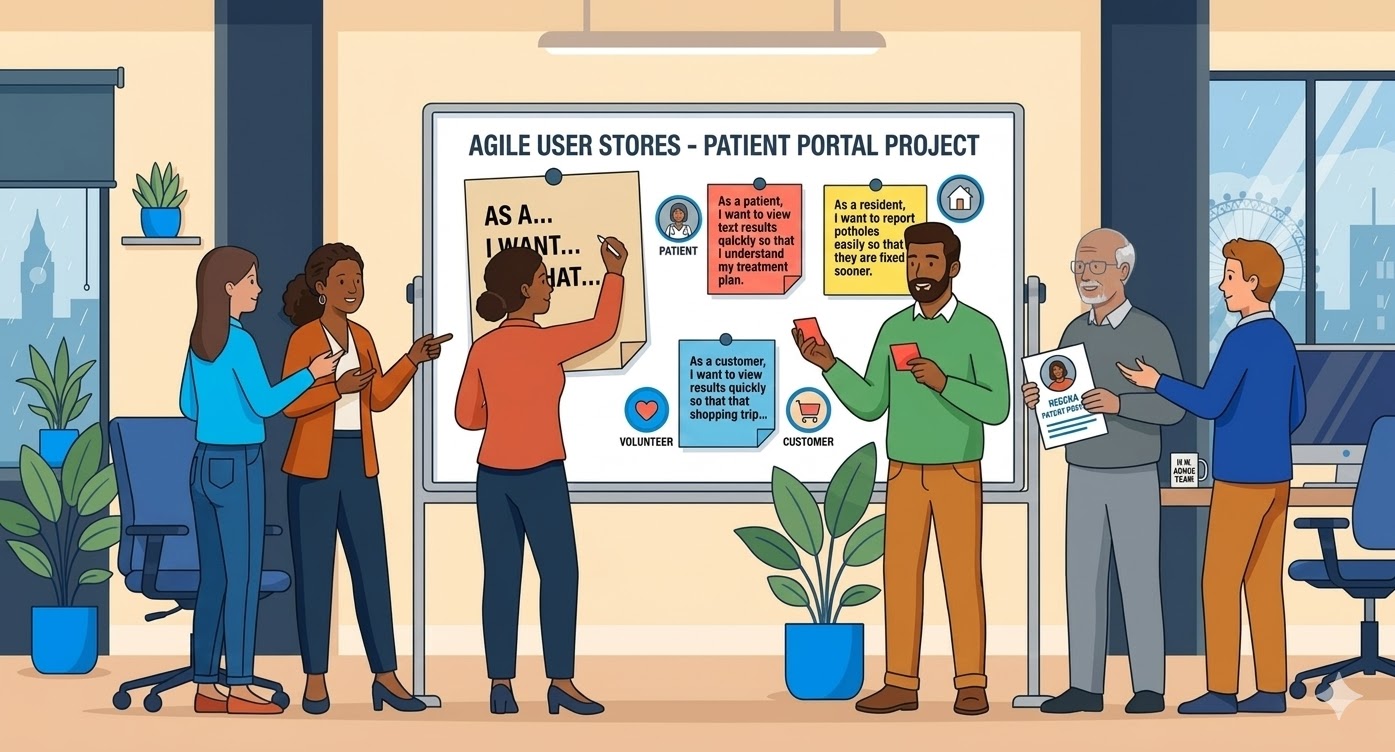
Writing user stories is one of the simplest and most powerful skills in Agile. A user story helps the team understand who they’re helping, what that person needs, and why it matters. Think of it as telling a short, clear story about a real person — not writing a long technical document. It keeps the work human, focused, and meaningful.
What a User Story Really Is
A user story is a short sentence that describes a need from the user’s point of view. It follows a simple pattern:
As a… (type of user) I want… (what they need) So that… (why it matters)
This structure keeps the team focused on real people, not just tasks. It reminds everyone that behind every feature is a human being trying to get something done.
In everyday life, it’s like saying: “As a parent, I want a quick school‑lunch recipe so that mornings are less stressful.” Clear. Human. Practical.
Why User Stories Matter
User stories help teams avoid building things nobody needs. They keep conversations focused on value, not assumptions. They also help teams break work into smaller, manageable pieces — which is essential in Agile.
In real organisations:
- NHS teams write stories to improve patient journeys (“As a patient, I want to see my test results online so that I don’t need to call the GP.”)
- Council teams write stories to make services easier (“As a resident, I want to report a pothole quickly so that the council can fix it sooner.”)
- Charities write stories to support communities (“As a volunteer, I want to sign up for shifts easily so that I can help more often.”)
- Startups and big tech companies write stories to build features customers actually use.
User stories keep everyone aligned on what matters most.
Breaking a User Story Into Tasks
A user story is not a task list. It’s the reason behind the work. Once the story is clear, the team breaks it into tasks like:
- Design the page
- Write the content
- Build the feature
- Test it
- Release it
This helps the team stay organised while still focusing on the user’s need.
Good User Stories Feel Real
A good user story:
- Describes a real person, not a vague “system user”
- Focuses on one clear need
- Explains why the need matters
- Is small enough to complete within a sprint
- Encourages conversation, not perfection
If a story feels too big or unclear, the team slices it into smaller stories — just like cutting a large cake into slices so everyone can enjoy it.
Practical Application (Walk‑Through Together)
Let’s imagine a simple scenario: booking a GP appointment online.
Step 1: Identify the user
A patient who works full‑time and struggles to call the GP during office hours.
Step 2: Write the user story
As a patient, I want to book an appointment online so that I don’t need to call during work hours.
Step 3: Break it into tasks
- Design the appointment page
- Add available time slots
- Connect to the GP system
- Test the booking flow
- Send confirmation emails
Step 4: Check if it’s clear and small enough
If it feels too big, split it:
- “As a patient, I want to see available time slots…”
- “As a patient, I want to receive a confirmation email…”
You’ve just written and refined a real user story — the same way NHS digital teams do it.
Your Turn (Activity)
Choose a small everyday situation — maybe planning a trip, organising your finances, or preparing for a job interview.
- Write one user story using the format: As a… I want… so that…
- Break it into 3–5 small tasks.
- Check if the story is clear, human, and focused on one need.
- If it feels too big, split it into smaller stories.
You’ve just practised the heart of Agile product thinking.
One Thing to Remember
A user story keeps the work human — it reminds the team who they’re helping, what they need, and why it matters.