How to run daily stand‑ups, sprint planning, retrospectives
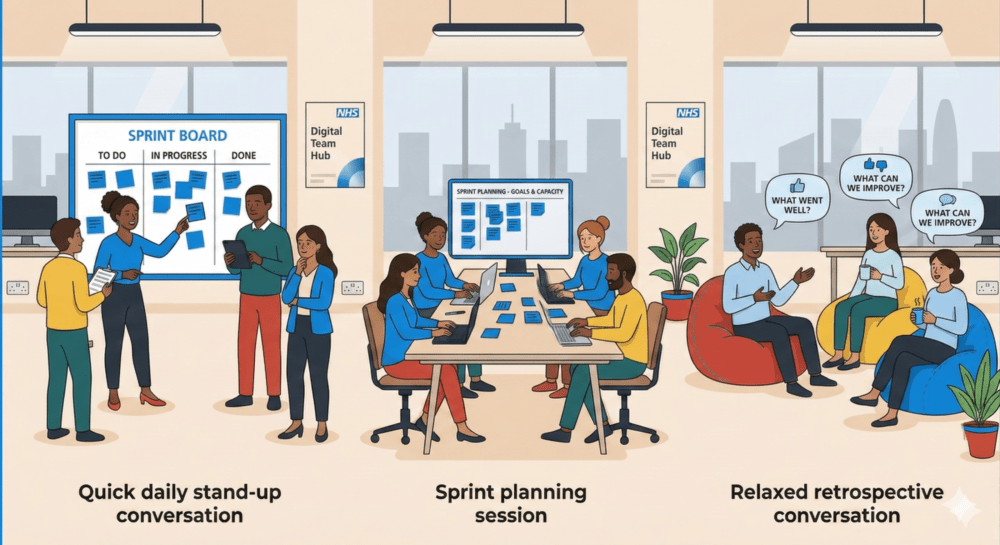
Daily Stand‑Ups: A Quick Morning Check‑In
A daily stand‑up is a short conversation where the team gathers for 10–15 minutes. The goal is simple: make sure everyone knows what’s happening and spot problems early.
Most Agile teams answer three questions during this daily stand up meetings:
- What did you do yesterday?
- What will you do today?
- Is anything blocking you?
It’s not a long report. It’s not a performance review. It’s just a quick sync so no one works in the dark.
In real UK workplaces, this might be:
- An NHSS digital team checking progress on a new appointment feature
- A council team reviewing tasks for a new online form
- A charity team aligning on tasks for a community event
- A tech startup team making sure everyone knows the day’s priorities
The stand‑up keeps everyone connected, especially when people work remotely.
Sprint Planning: Deciding What to Do Next
Sprint planning is where the team chooses what they will work on for the next short cycle (usually 1–2 weeks). A “sprint” is simply a focused period of work. For example, we want to work and focus on something for two weeks (2 weeks sprint)
During sprint planning, the team:
- Looks at the backlog (the list of tasks)
- Chooses the most important items
- Breaks them into smaller pieces
- Agrees on what they can realistically finish
It’s like planning your meals for the week. You don’t cook everything at once. You choose what matters, based on time, ingredients, and energy.
In real organisations:
- A council team might plan to fix three issues on the housing portal
- An NHSS team might focus on improving the login process
- A charity might plan tasks for a fundraising campaign
- A startup might plan to release a small new feature
Sprint planning gives the team clarity and direction.
Sprint Review: Showing What You’ve Completed
A sprint review is where the team shows the work they’ve completed during the sprint. A “sprint” is simply a focused period of work, usually 1–2 weeks. Think of the sprint review as “Here’s what we built — let’s look at it together.”
During the sprint review, the team:
- Shows the work they finished
- Explains what changed during the sprint
- Gets feedback from stakeholders (people who care about the work)
- Discusses what to improve or build next
It’s like cooking a new recipe and asking someone to taste it before serving it to guests. You want honest feedback early, not after everything is done.
In real organisations:
- An NHSS team might show a new appointment‑rescheduling feature to nurses and admin staff for feedback before it is released.
- A council team might demo an improved housing form to housing officers before it is released.
- A charity might show a new volunteer sign‑up page to volunteers before it is released.
- A startup might show a small new feature to early users or the CEO before it is released.
Sprint reviews help teams check if the work is actually useful, not just “done.” They keep everyone aligned and make sure the team is building the right thing. Sprint reviews give the team sincere, tested or external feedback on what they have done, and direction for what to improve next.
Retrospectives: Learning and Improving Together
A retrospective (often called a “retro”) is a meeting at the end of a sprint where the team reflects on how things went.
They talk about:
- What went well
- What didn’t go well
- What they want to improve next time
It’s not about blame. It’s about learning. It’s the same way families talk after hosting a big event: “Next time, let’s prep earlier” or “Let’s buy more drinks.”
In UK workplaces:
- NHSS teams use retros to reduce delays
- Council teams use them to improve communication
- Charities use them to make events smoother
- Startups use them to fix workflow issues quickly
Retros help teams grow stronger over time.
How These Three Fit Together
- Daily stand‑ups keep the team aligned day‑to‑day.
- Sprint planning sets the direction for the next cycle.
- Sprint reviews make sure the work is actually useful to the people who need it.
- Retrospectives help the team improve the way they work.
Together, they create a rhythm that keeps teams focused, flexible, and constantly learning.
Your Turn (Activity)
Take a small personal project — maybe updating your CV, organising your home, or preparing for an interview.
- Write down 5–7 tasks.
- Choose what you’ll work on this week (your “sprint”)
- Each morning, check in with yourself: (Daily stand-up)
- What did I do yesterday?
- What will I do today?
- What’s blocking me?
- At the end of the week, do a quick sprint review:
- Look at what you actually completed.
- Check if the results are useful.
- Ask yourself or someone close to you what needs adjusting for next week.
- Then do a short retrospective:
- What went well?
- What didn’t go well?
- What will you change next time?
You’ve just completed a full mini Agile cycle (Project) — planning, daily alignment, reviewing your results, and learning from the experience.
One Thing to Remember
Agile ceremonies or events work because they keep teams talking, planning, and improving — without overcomplicating the work.