How to explain your small project experience confidently
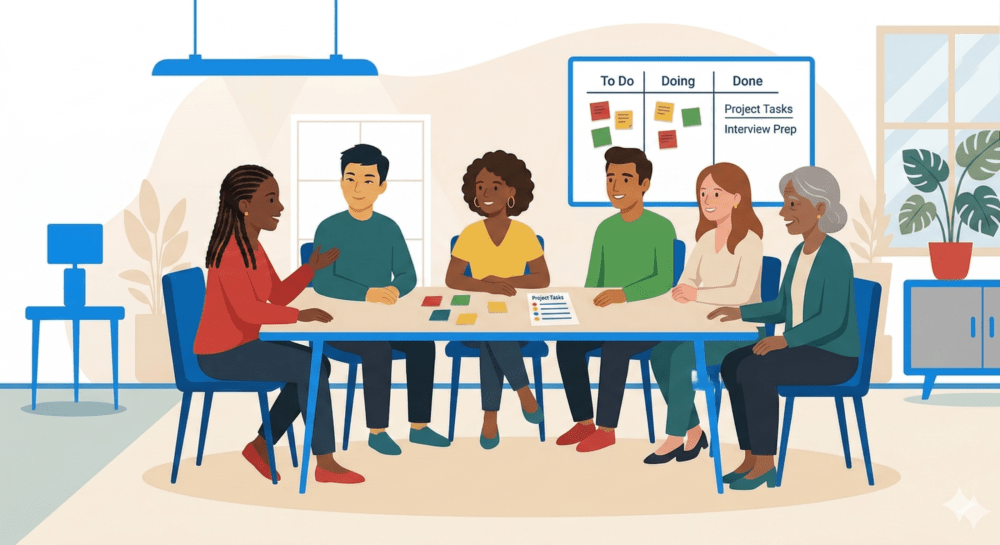
Many learners worry that their project experience is “too small,” “too simple,” or “not technical enough.” But here’s the truth: interviewers don’t hire you because you worked on a big project — they hire you because you can think clearly, work well with people, and deliver results.
Small projects often show these skills even better than big ones.
Think of this like us sitting together with a warm cup of tea, talking through your journey. You already have more experience than you think — you just need the language to express it.
What Counts as a Project? (More Than You Think)
A project is simply a piece of work with a goal, a beginning, and an end. It doesn’t need a big budget or a fancy title.
Your project might be:
- Organising a family event
- Helping a friend set up a small online shop
- Supporting a community group or church activity
- Improving a process at work (like organising files or reducing waiting time)
- Running a school assignment or group presentation
- Volunteering to coordinate a youth workshop
- Managing household tasks during a busy period
- Helping a small business track orders or customers
If you planned it, organised it, solved problems, or delivered something — it’s a project.
And it’s valid.
Why Small Projects Are Powerful in Agile Interviews
Agile teams — whether in hospitals, charities, tech startups, banks, or global companies — value people who can:
- Break work into smaller steps
- Communicate clearly
- Adapt when things change
- Support others
- Deliver value quickly
Small projects show these skills beautifully because they’re real, personal, and easy to explain.
How to Talk About Your Small Project Using Professional Agile Language
You don’t need to exaggerate. You simply translate your everyday experience into language Agile teams understand.
For example:
| Everyday Language | Agile-Friendly Language |
|---|---|
| “I made a list of tasks.” | “I created a simple backlog to prioritise work.” |
| “We checked in every morning.” | “We held short daily check-ins similar to stand-ups.” |
| “I broke the work into steps.” | “I used an iterative approach, delivering in small chunks.” |
| “I helped solve problems quickly.” | “I removed blockers so the team could keep moving.” |
You’re not pretending — you’re communicating clearly.
Use the STAR Method to Make Any Small Project Sound Strong
STAR helps you tell your story in a calm, structured way:
- S – Situation: What was happening?
- T – Task: What were you responsible for?
- A – Action: What steps did you take?
- R – Result: What changed because of you?
Even a tiny project becomes a confident, professional answer.
Example: Turning a Small Project Into a Strong Interview Answer
Imagine you helped organise a small community event.
Situation: “Our community group wanted to run a small awareness event, but we only had two weeks to prepare.”
Task: “My role was to coordinate the volunteers and make sure everything stayed on track.”
Action: “I created a simple task list, prioritised the most important activities, and held short check-ins with the volunteers. When delays came up, I helped remove obstacles and kept everyone updated.”
Result: “We delivered the event on time, had great attendance, and received positive feedback from the community.”
Clear. Confident. Professional.
How This Applies in Real Organisations
In real workplaces — hospitals, councils, charities, tech companies, global organisations — teams constantly work on:
- Small improvements
- Quick experiments
- Short-term tasks
- Pilot projects
- Internal processes
Agile teams love people who can take ownership of small pieces of work and deliver them well. Your small project experience shows exactly that.
Practical Application (Walk‑Through Together)
Let’s practise right now.
Think of a small project you’ve done — anything from organising a birthday party to helping a colleague at work.
Now answer these four questions:
- Situation: What was happening?
- Task: What were you responsible for?
- Action: What did you do?
- Result: What changed because of you?
Say it out loud. You’ll hear how professional it already sounds.
Your Activity
Write one short STAR story about a small project you’ve done. It can be from work, home, school, volunteering, or your community. Keep it honest, simple, and human.
One‑Sentence Summary
A small project becomes a powerful interview story when you explain it clearly, confidently, and in a structured way that shows how you think, how you work with people, and how you deliver results.