How to demonstrate Agile thinking in interviews
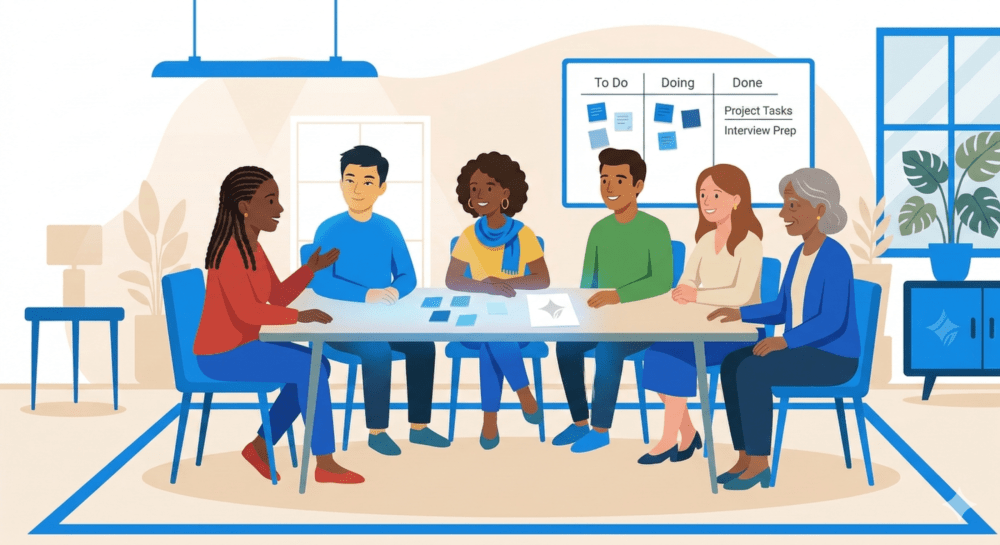
When interviewers say they want someone with “Agile thinking,” they’re not asking for complicated theory or years of experience. They’re looking for someone who can stay calm, adapt quickly, work well with people, and focus on delivering value — even when things change.
Think of Agile thinking as a mindset you already use in everyday life. You break big tasks into smaller steps. You adjust when plans shift. You communicate with people. You learn as you go. That’s Agile.
In an interview, your goal is to show this mindset through your stories, your language, and the way you explain your decisions.
What Agile Thinking Really Means (In Simple Language)
Agile thinking is about:
- Staying flexible when things change
- Breaking work into small, manageable steps
- Working closely with people
- Learning quickly and improving as you go
- Focusing on what matters most right now
These are skills you use whether you’re managing a household, running a small business, volunteering, or working in retail, healthcare, education, or community services.
Agile teams in hospitals, charities, tech startups, and global companies all value people who think this way.
How to Show Agile Thinking in Your Answers
You don’t need to say “I am Agile.” You show it through how you describe your actions.
Here are simple ways to demonstrate Agile thinking:
1. Show that you break work into smaller steps
Instead of saying: “I handled the whole project.” Say: “I broke the work into smaller tasks so we could make steady progress.”
2. Show that you adapt when things change
Instead of: “We stuck to the original plan.” Say: “When things changed, I adjusted quickly and helped the team stay on track.”
3. Show that you communicate clearly
Instead of: “I worked with the team.” Say: “I shared updates regularly and made sure everyone understood the priorities.”
4. Show that you focus on value
Instead of: “I did everything on the list.” Say: “I focused on the tasks that would make the biggest impact first.”
5. Show that you learn as you go
Instead of: “I didn’t know what to do at first.” Say: “I learned quickly, asked questions, and improved the process.”
These small shifts make you sound like someone who naturally thinks in an Agile way.
Use STAR to Demonstrate Agile Thinking Clearly
STAR helps you structure your stories so your Agile thinking shines through:
- Situation — What was happening?
- Task — What were you responsible for?
- Action — What Agile‑style steps did you take?
- Result — What positive outcome did you create?
Even simple experiences become strong Agile examples when told this way.
Example: Demonstrating Agile Thinking in a Simple Story
Imagine you helped organise a small workshop.
Situation: “We needed to organise a workshop quickly, and the team was unsure where to start.”
Task: “My role was to help plan and coordinate the tasks.”
Action: “I broke the work into small steps, prioritised the most important tasks, and held short check‑ins with the team. When things changed, I adjusted the plan and kept everyone updated.”
Result: “We delivered the workshop on time, and the participants gave great feedback.”
This is Agile thinking — clear, calm, and practical.
How Agile Thinking Shows Up in Real Organisations
In real workplaces:
- Hospitals use Agile thinking to improve patient flow
- Local councils use it to deliver community services faster
- Charities use it to run events with limited resources
- Tech companies use it to release features quickly
- Global organisations use it to manage change across teams
Agile thinking is not about tools — it’s about mindset.
Practical Application (Walk‑Through Together)
Let’s practise right now.
Think of a moment when:
- Plans changed
- You had to adapt
- You broke something into smaller steps
- You helped people stay organised
- You learned something quickly
Now answer these four questions:
- What was happening? (Situation)
- What were you responsible for? (Task)
- What Agile‑style actions did you take? (Action)
- What positive outcome came from it? (Result)
You’ve just demonstrated Agile thinking.
Your Activity
Write one short STAR story where you showed Agile thinking — even in a small, everyday situation. It could be from work, home, school, volunteering, or your community.
One‑Sentence Summary
Agile thinking is simply the ability to stay flexible, break work into small steps, communicate clearly, and focus on what matters — and you can demonstrate it confidently through the everyday stories you already have.