How to build your first portfolio project
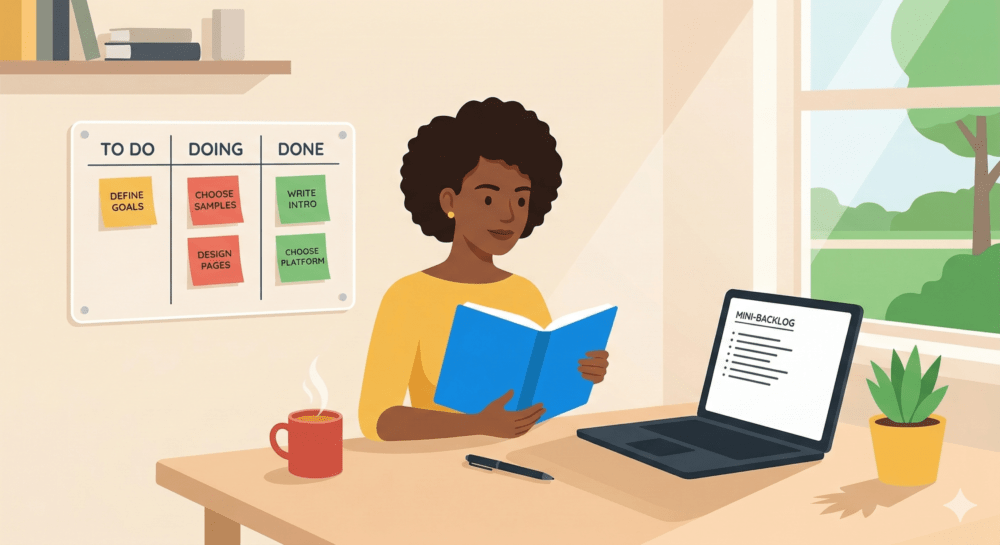
How to Build Your First Portfolio Project
Building your first portfolio project can feel intimidating, especially when you’re new to Agile or stepping into a new career. But here’s the truth: your first project doesn’t need to be big, perfect, or complicated. It just needs to show that you understand how to organise work, support a team, and deliver something useful — the heart of Agile.
Why a Portfolio Project Matters
In real organisations — whether it’s a hospital, a local council, a charity, a tech startup, or a global company — teams want people who can:
- Break work into small steps
- Communicate clearly
- Adapt when things change
- Deliver value, even in simple ways
A portfolio project shows employers that you can do these things, even if you’ve never had a formal Agile job before.
Step 1: Choose a Simple, Real‑Life Problem
Your first project should be small and familiar. Something from your everyday life works perfectly.
Examples:
- Organising a community event
- Improving a small business process
- Helping a charity manage volunteers
- Creating a simple digital resource
- Streamlining a household task
- Supporting a school or youth programme
The goal is not to impress with complexity — it’s to show clear thinking.
Step 2: Turn It Into an Agile Project
Once you choose your idea, break it down using simple Agile tools.
Create a mini‑backlog
A backlog is just a list of tasks. Write down everything you need to do, starting with the most important.
Use a simple Kanban board
Three columns are enough:
- To Do
- Doing
- Done
You can use paper, sticky notes, Trello, Notion, or any tool you like.
Work in small steps
Instead of trying to finish everything at once, complete one small task at a time — just like real Agile teams.
Step 3: Document Your Process (This Is What Employers Love)
Your project doesn’t need to be fancy. What matters is how you explain it.
Document:
- What problem you chose
- Why it mattered
- How you planned the work
- What tools you used
- What challenges you faced
- What you learned
This shows maturity, reflection, and real‑world thinking.
Step 4: Add a Simple “Case Study” to Your Portfolio
A case study is just a short story about your project.
Use this structure:
- Background – What was the problem?
- Goal – What did you want to achieve?
- Approach – How did you use Agile thinking?
- Outcome – What changed because of your work?
- Learning – What would you improve next time?
This is exactly how professionals present their work.
Step 5: Keep It Small, Honest, and Human
Your first project doesn’t need to look like something from a big tech company. It just needs to show:
- Clear thinking
- Organisation
- Communication
- Problem‑solving
- Reflection
These are the skills employers value most.
Practical Application (Walk‑Through Together)
Let’s build a simple project idea right now.
Imagine you want to help a local community group organise a monthly workshop.
You could:
- Define the problem: “The group struggles to plan workshops on time.”
- Create a backlog:
- Find speakers
- Book a venue
- Promote the event
- Prepare materials
- Use a Kanban board: Move tasks from To Do → Doing → Done.
- Deliver value: Run one successful workshop.
- Document your learning: What worked? What would you change?
Congratulations — that’s a full Agile portfolio project.
Your Activity
Choose one small problem from your life, community, or workplace. Write down:
- The problem
- The goal
- Five tasks for your backlog
This is the seed of your first portfolio project.
One‑Sentence Summary
Your first portfolio project doesn’t need to be perfect — it just needs to show how you think, organise work, and deliver value in simple, human ways.