How Agile works inside real organisations
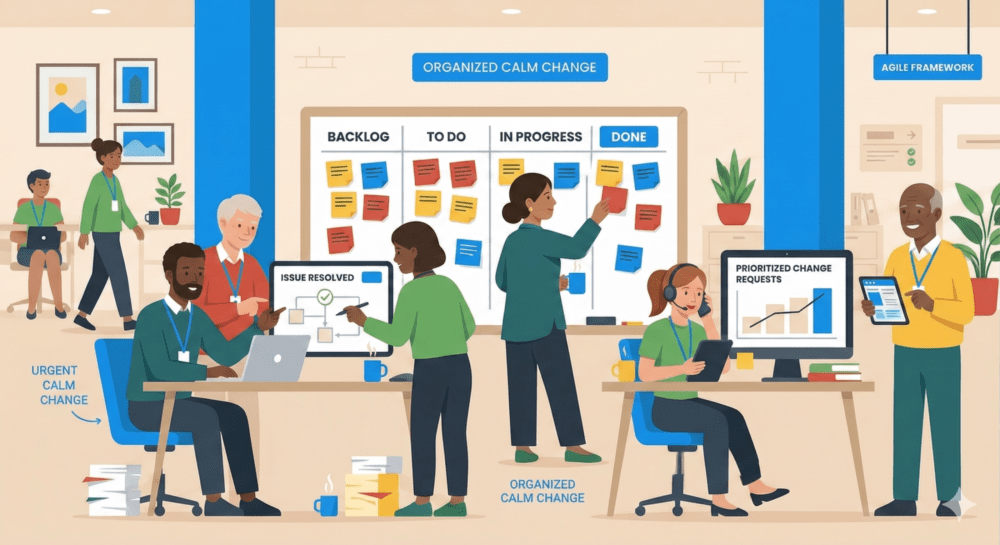
Agile inside real organisations is not a fancy framework or a set of complicated rules. It’s a practical way of working that helps teams deal with real‑life issues, changing priorities, unexpected problems, and customers who keep discovering what they want after the work has started.
Think of Agile as a way for teams to stay organised, stay focused, and stay sane even where there are a lot of things to be done.
Why Organisations Use Agile
Most organisations — councils, NHSS teams, charities, startups, and even big banks, over 70% of Tech companies in the world, use Agile because:
- Plans change all the time
- Customers rarely know exactly what they want at the start
- Technology moves fast
- Teams need to deliver value quickly
- Long projects often fail because they try to predict everything upfront
Agile gives teams a way to move forward even when things are uncertain.
What Agile Looks Like Day‑to‑Day
When Agile is working well, you’ll notice a few things:
1. Work is broken into small pieces
Instead of one huge project, teams focus on small, manageable chunks. This makes progress visible and reduces overwhelm.
2. Teams talk often
Not long meetings but short, focused conversations. People check in, share updates, and unblock each other.
3. Plans are flexible
If something changes, the team adjusts. No guilt. No drama. Just adaptation.
4. Customers give feedback early
Teams don’t wait until the end to show their work. They share early versions, gather feedback, and improve.
5. Progress is measured by results, not documents
A working feature is more valuable than a perfect plan.
How Agile Fits Into Real Workplaces
In a council office
A digital team might release a small version of a new online form, gather feedback from residents, and improve it every two weeks.
In the NHSS
A team improving a patient booking system might focus on one small improvement at a time, like reducing the number of clicks, instead of redesigning the whole system at once.
In a charity
A team running a new support programme might test a small pilot first, learn from it, and then scale it.
In a startup
Teams release features quickly, learn from users, and adjust direction based on what actually works. Across all these places, Agile helps teams stay responsive instead of rigid.Imagine a small UK startup building an app that helps people find affordable local events. The team notices that users keep asking for a “Save for Later” button. Instead of planning a huge redesign, they build a tiny version of the feature, just a simple bookmark icon.
They release it to a small group of users within a week. Users try it and say, “It works, but I want to see all my saved events in one place.” So the team adds a “Saved Events” page the following week. More feedback comes in: “Can I share saved events with friends?” The team adjusts again and adds a share button.
They didn’t guess what users wanted. They learned by releasing small pieces, listening, and improving. That’s Agile. Quick delivery, real feedback, and constant adjustment.
What Makes Agile Work Well
Agile succeeds when teams:
- Keep work visible
- Prioritise clearly
- Talk openly
- Trust each other
- Learn from mistakes
- Stay focused on delivering value
It’s less about tools and more about mindset and people
Your Turn (Activity)
Think about a workplace you’ve been in — even if it wasn’t a tech job. Write down:
- A time when plans changed suddenly
- How the team reacted
- What could have been done in smaller steps
- What conversations would have helped
This helps you see that Agile isn’t new — it’s a structured version of what people already do when things get messy.
One Thing to Remember
Agile works in real organisations because it helps teams deliver value even when everything around them keeps changing.