Creating sprint boards
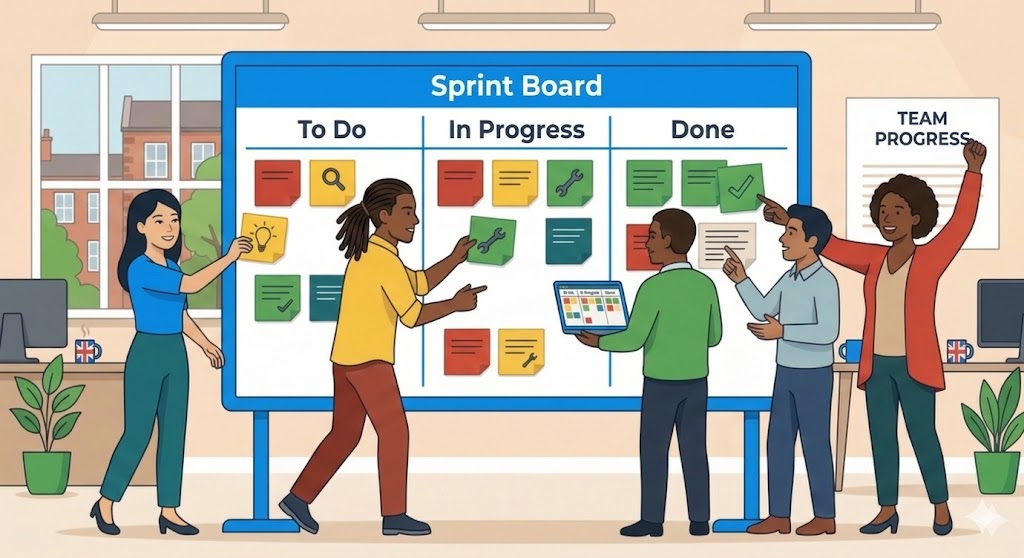
Creating a sprint board is one of the simplest ways to bring clarity, focus, and calm into an Agile team. A sprint board shows the work for the current sprint and where each piece of work sits right now. Think of it as the team’s shared “to‑do list,” but more visual, more organised, and easier for everyone to understand at a glance.
What a Sprint Board Is
A sprint board is a visual board that shows the team’s tasks for the sprint. It usually has three main columns:
- To Do — work the team has committed to
- In Progress — work someone is actively doing
- Done — work completed and ready to go
Some teams add extra columns like “Blocked” or “Ready for Review,” but beginners only need the basics.
A sprint board can be physical (sticky notes on a wall) or digital (Trello, Jira, Azure DevOps, Monday.com). The tool doesn’t matter — the clarity does.
Why Sprint Boards Matter
A sprint board helps the team:
- See the whole sprint at a glance
- Stay aligned day‑to‑day
- Spot problems early
- Avoid confusion about who is doing what
- Celebrate progress as tasks move to “Done”
It’s the same feeling as organising your home with labelled boxes — suddenly everything feels clearer and easier to manage.
How Sprint Boards Work in Real Organisations
In the NHS A digital team might track tasks like “Design appointment page,” “Fix login bug,” or “Test prescription feature.”
In a council A team might track improvements to a housing form or updates to a waste‑collection service.
In a charity A team might track tasks for a fundraising campaign — social media posts, volunteer coordination, event logistics.
In a startup or big tech company Teams track new features, bug fixes, experiments, and customer feedback.
No matter the organisation, the sprint board becomes the team’s shared source of truth.
How to Build a Simple Sprint Board
A beginner‑friendly sprint board only needs three steps:
- List the tasks for the sprint These come from sprint planning.
- Write each task on a sticky note or card One task per note — keep it small and clear.
- Place the notes in the right column As work moves forward, the notes move too.
The movement of sticky notes from left to right is surprisingly motivating. It shows progress in a way that long documents never can.
Practical Application (Walk‑Through Together)
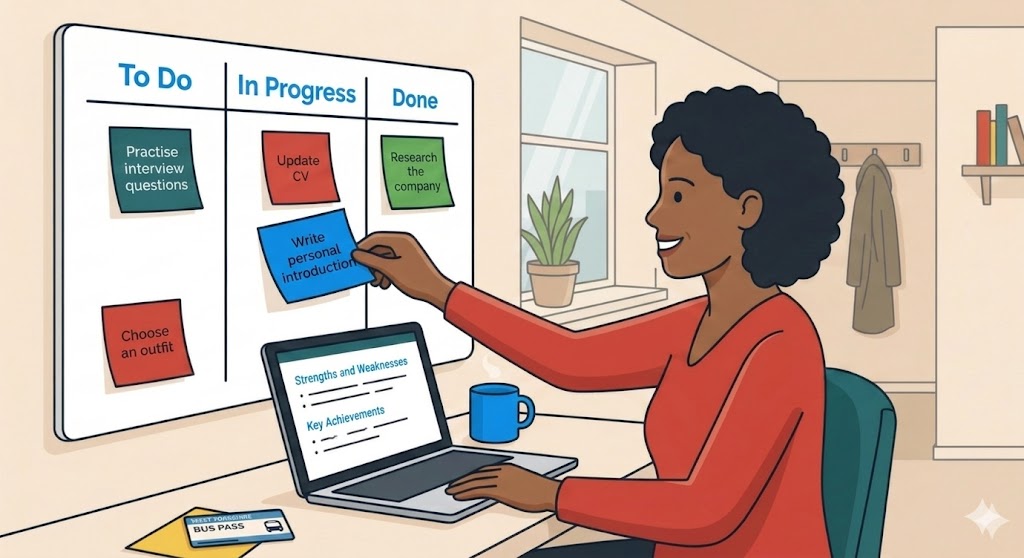
Let’s imagine a simple project: preparing for a job interview.
Step 1: List your tasks
- Update CV
- Write a short personal introduction
- Research the company
- Practise interview questions
- Choose an outfit
Step 2: Create your sprint board Columns: To Do | In Progress | Done
Step 3: Place each task in “To Do” Then move them as you work on them.
Example:
- “Update CV” → In Progress
- “Research the company” → Done
- “Choose an outfit” → To Do
You’ve just created and used a sprint board — the same way teams do in NHS digital, councils, charities, and tech companies.
Your Turn (Activity)
Choose a small project in your life — maybe planning a move, preparing for an exam, or organising your finances.
- Write down 5–7 tasks.
- Create three columns: To Do | In Progress | Done.
- Place each task in “To Do.”
- As you work, move tasks across the board.
- At the end of the week, look at your “Done” column and reflect on your progress.
You’ve just practised visual Agile planning.
One Thing to Remember
A sprint board turns confusion into clarity — it shows the team what matters, what’s moving, and what’s done.