Building a product backlog
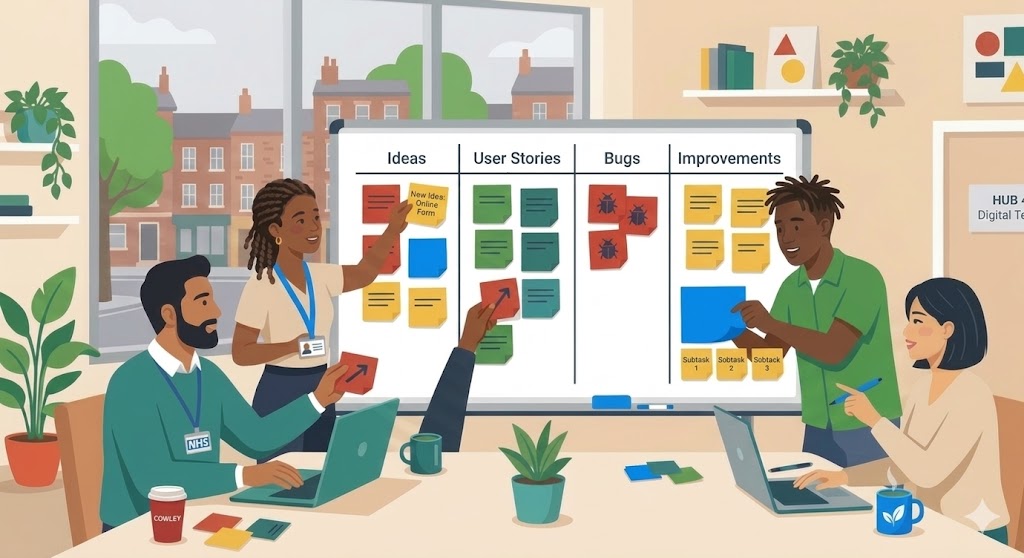
Building a product backlog is like creating the “shopping list” for your project — a clear, organised list of everything the team might need to deliver over time. It doesn’t mean you’ll do everything on the list right away. It simply gives the team a shared place to collect ideas, requests, problems, and improvements so nothing gets lost. For beginners, it’s one of the easiest ways to bring structure and calm into a project.
What a Product Backlog Really Is
A product backlog is a prioritised list of work the team may deliver in the future. It includes user stories, bugs, improvements, research tasks, and anything else that adds value.
Think of it like planning a big family event. You write down everything you might need — food, decorations, transport, music — even though you won’t buy everything today. The list helps you stay organised and make good decisions.
A backlog works the same way: it holds all the ideas so the team can choose what to focus on next.
What Goes Into a Backlog
A healthy backlog usually contains:
- User stories — short descriptions of what users need
- Bugs — things that are broken
- Improvements — ways to make something better
- Research tasks — things the team needs to explore
- Technical work — behind‑the‑scenes tasks that support the product
Each item should be small, clear, and written in simple language.
How Backlogs Work in Real Organisations
In the NHS A backlog might include stories like “As a patient, I want to view my test results online” or bugs like “Fix error on appointment page.”
In councils Teams might add improvements to housing forms, new features for waste‑collection reminders, or tasks to simplify online payments.
In charities The backlog might include ideas for donation pages, volunteer sign‑up improvements, or new campaign features.
In startups and big tech companies Backlogs grow quickly — new features, customer feedback, experiments, and technical upgrades all live there.
The backlog becomes the team’s shared memory — a place where ideas stay safe until the right time.
Prioritising the Backlog
Not everything is equally important. Agile teams regularly review the backlog and decide:
- What brings the most value
- What is urgent
- What is realistic
- What depends on something else
This process is called backlog refinement or prioritisation — simply making the list clearer and more useful.
It’s like sorting your shopping list by what you need today, what can wait, and what’s optional.
Why Backlogs Matter
A good backlog helps the team:
- Stay focused on what matters
- Avoid chaos and last‑minute surprises
- Make better decisions during sprint planning
- Keep stakeholders informed
- Build the product step by step
It gives everyone confidence that the work is organised and purposeful.
Practical Application (Walk‑Through Together)

Let’s imagine a simple project: setting up your new life in a different UK city.
Step 1: Brainstorm everything you might need
- Find a GP
- Update your CV
- Look for local job opportunities
- Set up broadband
- Buy basic furniture
- Learn bus routes
- Register with the council
This is your initial backlog — a big list of possible tasks.
Step 2: Prioritise the list
Ask yourself: What must happen first? What can wait?
High priority:
- Set up broadband
- Look for job opportunities
- Update CV
Medium priority:
- Register with the council
- Learn bus routes
Low priority:
- Buy furniture
- Find a GP (unless urgent)
Step 3: Make the items smaller and clearer
“Buy furniture” becomes:
- Buy a bed
- Buy a desk
- Buy kitchen basics
Now your backlog is clearer, more realistic, and easier to work with — just like Agile teams do in NHS digital, councils, charities, and tech companies.
Your Turn (Activity)
Choose a small project in your life — maybe planning a move, preparing for an exam, or organising your finances.
- Write down everything you might need to do.
- Group the items into High, Medium, and Low priority.
- Break any large items into smaller, clearer tasks.
- Keep the list somewhere visible — this is now your personal backlog.
You’ve just built and refined a real product backlog.
One Thing to Remember
A product backlog keeps the work organised, prioritised, and human‑centred — it turns scattered ideas into a clear path forward.