How to manage blockers, risks, and stakeholder expectations
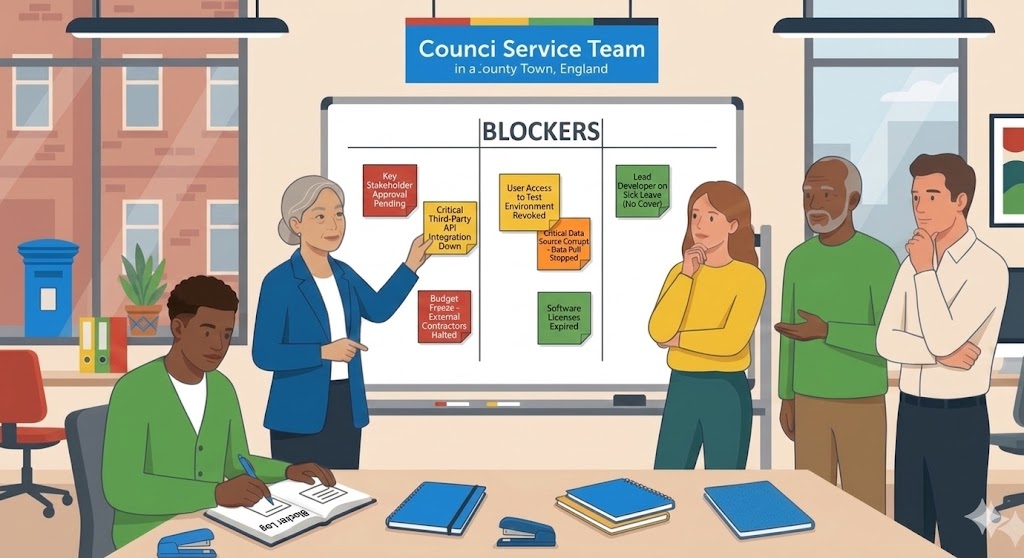
Blockers: What’s Stopping the Work Right Now
A blocker is anything that stops someone from doing their task. It could be waiting for access to a system, missing information, a broken tool, or someone being off sick. In normal life, it’s like trying to cook dinner but realising you don’t have the key ingredient, you can’t continue until that’s sorted.
In Agile teams, blockers are raised quickly, usually in the daily stand‑up. The goal is not to blame anyone. The goal is to remove the obstacle fast so the work can continue.
In real UK workplaces:
- In the NHSS, a developer might be blocked because they need approval to access patient test data.
- In a council, a designer might be blocked because they’re waiting for legal wording for a form.
- In a charity, a volunteer coordinator might be blocked because a partner organisation hasn’t confirmed dates.
- In a tech startup, a developer might be blocked because the API (a system connection) is down.
Your job is to spot blockers early and help remove them before they slow the whole team down.
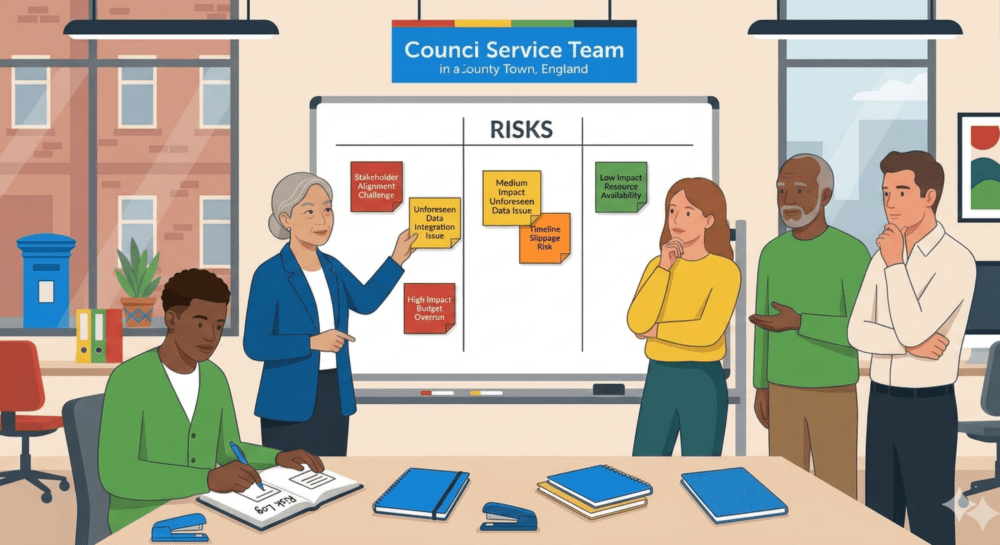
Risks: What Might Go Wrong Later
A risk is something that could cause problems in the future. It hasn’t happened yet, but it might. Think of it like checking the weather before a family picnic. If rain is likely, you prepare a backup plan.
Agile teams manage risks by:
- Talking about them openly
- Writing them down
- Deciding how serious they are
- Agreeing what to do if they happen
In real organisations:
- An NHSS team might worry that a new feature will confuse older patients.
- A council team might worry that a supplier won’t deliver on time.
- A charity might worry that a funding deadline will be missed.
- A big tech company might worry that a new regulation will affect their product.
Good Agile teams don’t panic about risks. They prepare for them.
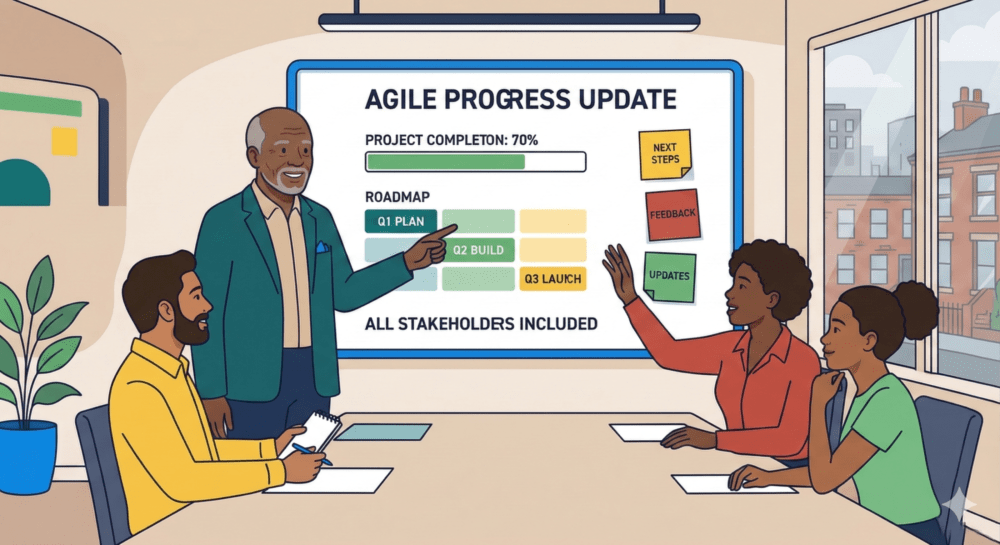
Stakeholder Expectations: Keeping People Informed and Confident
Stakeholders are the people who care about, benefit or are impacted by the project — managers, customers, service users, partners, or anyone affected by the work. Managing expectations simply means keeping them informed, involved, and confident.
It’s like planning a family event. If you don’t tell people what’s happening, they’ll fill the gaps with their own assumptions. But if you update them regularly, they feel included and calm.
Agile teams manage expectations by:
- Showing progress often (sprint reviews)
- Sharing what’s coming next
- Being honest about delays
- Explaining why priorities change
- Asking for feedback early
In real workplaces:
- NHSS stakeholders want to know how changes will affect patients.
- Council leaders want to know when residents will see improvements.
- Charity trustees want to know how the project supports the mission.
- Startup founders want to know how the new feature impacts business growth.
Clear communication builds trust. Silence destroys it.
How These Three Fit Together
- Blockers slow the team down today.
- Risks might slow the team down tomorrow.
- Stakeholder expectations shape how people feel about the work.
When you manage all three well, the team stays focused, the project stays healthy, and the people around you stay confident.
Practical Application (Walk‑Through Together)
Imagine you’re planning to move to a new flat in Bradford. Nothing fancy — just a normal life situation most people understand.
1. Identify a Blocker (what’s stopping you right now)
You realise you can’t book movers because you don’t know your exact move‑in date yet. That’s a blocker — something stopping progress today.
Action: Send a quick message to the landlord or letting agent asking for confirmation of the handover date.
2. Identify a Risk (what might go wrong later)
There’s a chance the moving van might not fit on your street because parking is tight. That’s a risk — something that might cause trouble later.
Action: Check the street layout on Google Maps or ask a neighbour about parking restrictions.
3. Identify a Stakeholder (someone who cares about the outcome)
Your friend who agreed to help you move is a stakeholder. They expect you to give them enough notice so they can plan their day.
Action: Send them a quick update: “I’m waiting for the final date, but it should be next week. I’ll confirm soon.”
4. What You’ve Just Done
You removed a blocker, prepared for a risk, and managed a stakeholder’s expectations — the same skills Agile teams use in NHS digital projects, council services, charities, startups, and big tech companies.
Your Turn (Activity)
Choose a small project in your life — maybe planning to move house, job or city, preparing for an exam, or organising your finances.
- Write down one thing that is blocking you right now.
- Write down one risk — something that might go wrong later.
- Write down one person who cares about the outcome and what they expect from you.
- For each one, write one action you can take today to move things forward.
You’ve just practised the core of Agile project management.
One Thing to Remember
Managing blockers, risks, and expectations is how you keep the work moving and the people around you confident.