Scrum, Kanban, Lean, Agile values & principles
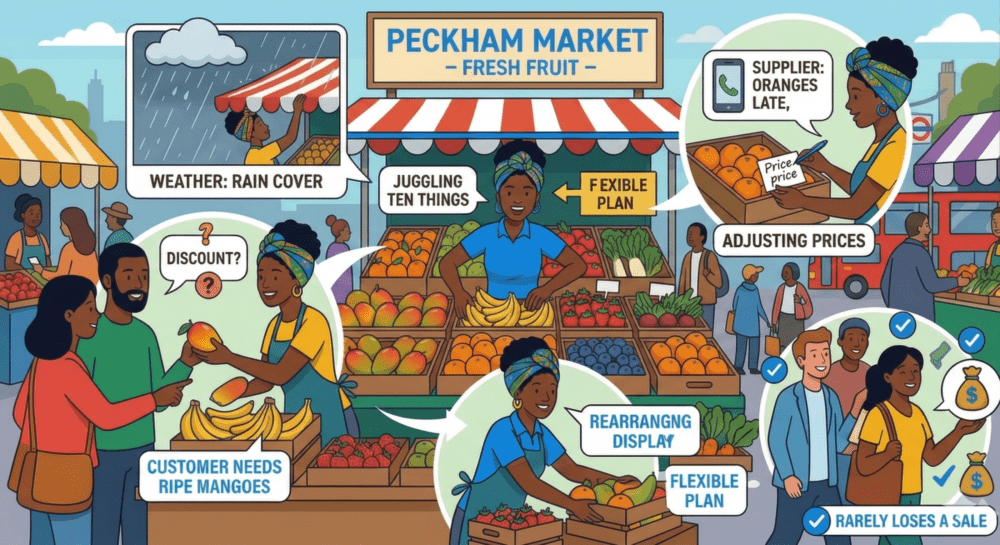
Picture a Saturday morning in Peckham Market. A fruit seller is juggling ten things at once. A customer wants ripe mangoes. Another wants a discount on bananas. Rain starts falling, so she quickly pulls a cover over the stall. Her supplier calls to say the oranges will arrive late. She adjusts her prices. She rearranges the display. She smiles at customers while constantly adapting. She doesn’t follow a long, fixed plan. She responds to what’s happening right now. And because she adapts quickly, she rarely loses a sale.
1. What This Means in Agile
Agile works exactly like that market stall. You don’t create one big plan and hope the world behaves. You adjust as you go. You listen to customers. You respond to change. You deliver value in small steps instead of waiting months for a “perfect” plan. Agile is about staying flexible, learning fast, and improving as you move.
2. The Simple Explanation
Agile means:
- You don’t try to predict everything upfront
- You work in small steps
- You check in often
- You change direction when needed
- You focus on what helps the customer right now
Think of it like cooking. You taste the food as you go. You adjust the salt. You add more pepper. You don’t wait until the end to find out it’s bland.
3. Real Workplace Example
Imagine you’re working in a council office helping to launch a new online form for residents. Instead of planning for six months, the team releases a small version first. Residents try it. They give feedback. The team improves it. Maybe residents say the form is confusing. Instead of blaming the plan, the team updates the form within a week. That’s Agile in action — small steps, quick learning, constant improvement.
5. Your Turn (Activity)
Take a piece of paper. Write down a small project in your life — maybe organising a birthday, planning a move, or setting up a side hustle. Break it into 5–7 tiny steps. Next to each step, write: “What could change?” Then write: “How would I adapt?” You’ve just practised Agile thinking.
6. One Thing to Remember
Agile is simply the skill of adapting quickly while still moving forward.
Agile Frameworks – Scrum, Kanban, Lean
Scrum
1. The Story
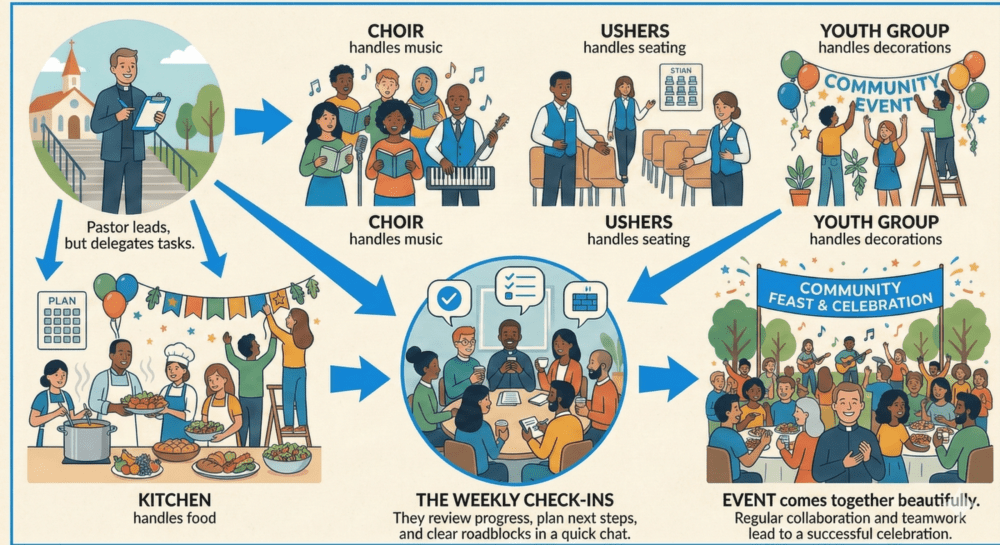
Think of a church preparing for a big community event. The pastor can’t do everything. So the choir handles music. The ushers handle seating. The kitchen team handles food. The youth group handles decorations. Every Sunday before the event, they gather for a quick chat. They check what’s done, what’s next, and what’s blocking progress. No long speeches. No drama. Just teamwork. Each group knows its role. They work in short bursts. They review progress often. And the event comes together beautifully.
2. What This Means in Scrum
Scrum is a way of working inside Agile. It’s like the church teams working together in short cycles. Scrum gives you:
- Clear roles
- Short work cycles (called sprints — short periods of focused work)
- Quick daily check‑ins
- Regular reviews
- A rhythm that keeps everyone aligned
Scrum is teamwork with structure, but still flexible.
3. The Simple Explanation
Scrum works like this:
- You choose a small goal for the next 1–4 weeks (the sprint)
- The team works together to achieve it
- Every day, you have a short check‑in
- At the end, you show what you finished
- Then you reflect on how to work better next time
It’s like cleaning your house room by room instead of trying to clean the whole place in one day.
4. Real Workplace Example
Imagine you’re working in an NHSS digital team improving the appointment booking system. The team decides that the next sprint goal is “Make it easier for patients to change appointments online.” For two weeks, everyone focuses only on that. Each morning, they have a 15‑minute check‑in. At the end of the sprint, they show the improved feature to real users. Users say what works and what doesn’t. The team adjusts and plans the next sprint. This rhythm keeps the work moving without overwhelm.
5. Your Turn (Activity)
Pick a small personal goal — maybe organising your CV, setting up a LinkedIn profile, or planning a small event. Create a 1‑week sprint. Write:
- Sprint Goal: “By the end of this week, I will have setup my LinkedIn profile”
- Tasks: List 5–7 small tasks to achieve the above
- Daily Check‑In: Each morning, ask yourself: “What will I do today as regards the above task ?” At the end of the week, review what worked and what didn’t. You start another sprint, the next week and you repeat the process to build, manage and/or improve a product, process or a service or just anything you can call a project.
6. One Thing to Remember
Scrum is simply a structured way for a team to make steady progress in small, focused steps.
Kanban
1. The Story
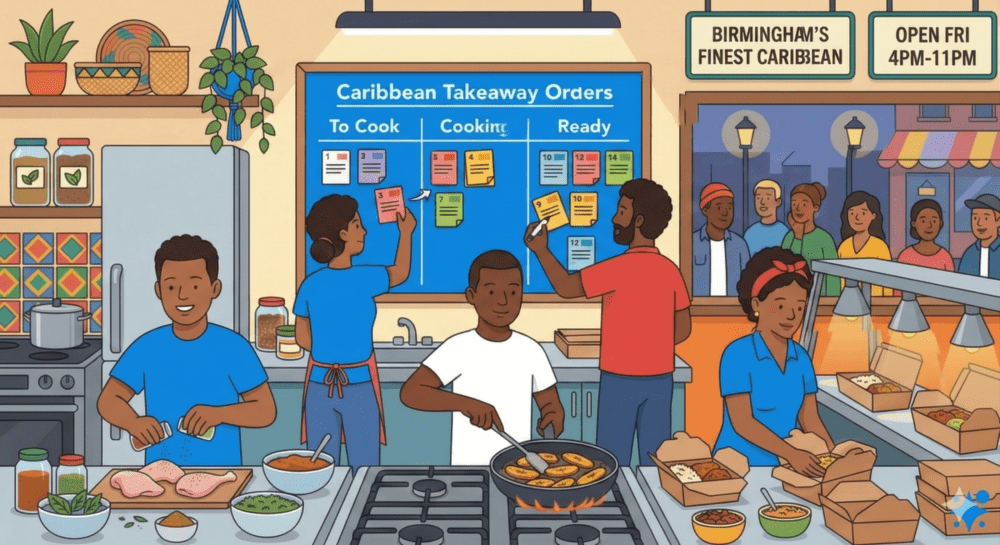
Imagine a busy Caribbean takeaway shop in Birmingham on a Friday evening. Orders are flying in. One person is seasoning chicken. Another is frying plantain. Someone else is packing boxes. The owner has a whiteboard on the wall with three columns: “To Cook”, “Cooking”, and “Ready”. Every new order goes into “To Cook”. When someone starts working on it, they move it to “Cooking”. When it’s done, it moves to “Ready”. No shouting. No confusion. Everyone can see what’s happening. The board keeps the kitchen calm, even when the queue is long.
2. What This Means in Agile
Kanban works exactly like that takeaway board. You make the work visible. You show what’s waiting, what’s being done, and what’s finished. Kanban helps you avoid overwhelm because you can only handle a few tasks at once. When the “Cooking” column is full, no one starts new work. They finish what’s already there. It’s a simple way to stay organised, reduce stress, and keep work flowing smoothly.
3. The Simple Explanation
Kanban is a visual system for managing work. Think of it like three buckets:
- To Do — things you haven’t started
- Doing — things you’re working on right now
- Done — things you’ve finished
You move tasks from one column to the next. You don’t overload yourself. You focus on finishing, not starting everything at once. It’s like washing clothes. You don’t wash, dry, and iron ten outfits at the same time. You move them through stages. You wash the cloths – You dry them – Iron them
4. Real Workplace Example
Picture a small charity in Leeds helping people with housing support. The team receives many requests. Before Kanban, everything felt urgent. Emails got lost. Staff felt stressed. They create a Kanban board on a wall:
- “New Requests”
- “In Progress”
- “Waiting for Documents”
- “Completed”
Each case is written on a sticky note. Now the team can see exactly where every case is. If “In Progress” is full, they don’t take on new cases until they finish some. The work becomes calmer. The team becomes more reliable. Clients get faster support.
5. Your Turn (Activity)
Take a blank sheet of paper. Draw three columns: To Do | Doing | Done. Write down 7–10 small tasks you want to complete this week. Place each task in the “To Do” column. Move only 1–3 tasks into “Doing”. As you finish each one, move it to “Done”. You’ve just built your first Kanban board.
If you prefer digital tools, Trello and Notion both offer free Kanban boards.
6. One Thing to Remember
Kanban helps you stay calm and productive by showing your work and limiting how much you do at once.
Lean
1. The Story
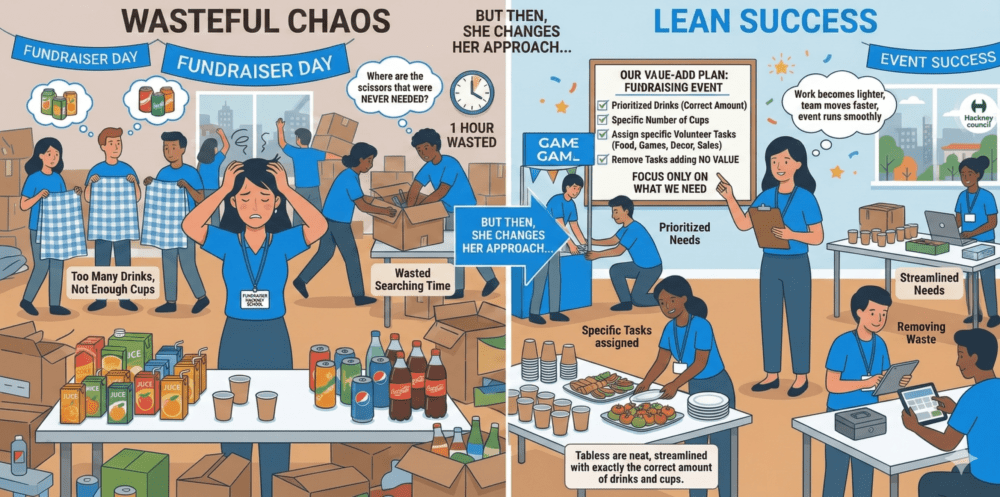
Imagine a mother organising a school fundraising day in Hackney. She has volunteers helping with food, games, decorations, and ticket sales. At first, everyone brings everything they think is needed. Too many drinks. Not enough cups. Three people buy the same tablecloths. One person spends an hour searching for scissors that were never needed. Half the effort is wasted. The day feels stressful. So she changes her approach. She asks, “What do we actually need?” She removes tasks that add no value. She keeps only what helps the event succeed. Suddenly, the work becomes lighter. The team moves faster. The event runs smoothly.
2. What This Means in Agile
Lean is about removing waste — anything that doesn’t help deliver value. Just like the mother stopped requesting for unnecessary items and stopped doing tasks that didn’t matter, Lean helps teams focus on what truly makes a difference. Lean asks simple questions:
- What helps the customer?
- What slows us down?
- What can we remove? Lean makes work cleaner, faster, and easier.
3. The Simple Explanation
Lean means doing only what matters and removing everything that slows you down. Waste can be:
- Doing extra work no one asked for
- Waiting for approvals
- Searching for missing information
- Repeating the same task twice
- Using complicated steps when a simple one works
Lean helps you spot these problems and fix them. It’s like cleaning your kitchen. When you remove junk, you cook faster and with less stress.
4. Real Workplace Example
Imagine you’re working in an NHSS clinic helping patients register for appointments. The process has seven steps. Patients fill a form. Staff re‑enter the same information. A manager checks it. Another team checks it again. Patients wait longer than necessary. Staff feel drained. A Lean review shows that three steps add no value. They remove the duplicate checks. They simplify the form. They place the printer closer to the reception desk so staff stop walking back and forth. Suddenly, registration takes half the time. That’s Lean — removing waste so people can focus on what matters.
5. Your Turn (Activity)
Take a piece of paper. Write down a small process in your life — maybe preparing for work, cooking dinner, or getting your kids ready for school. List every step you take. Circle the steps that don’t add value or slow you down. Ask yourself: “What can I remove or simplify?” You’ve just done a Lean improvement.
6. One Thing to Remember
Lean helps you deliver value faster by removing anything that wastes time, energy, or resources.
Agile Values & Principles
1. The Story
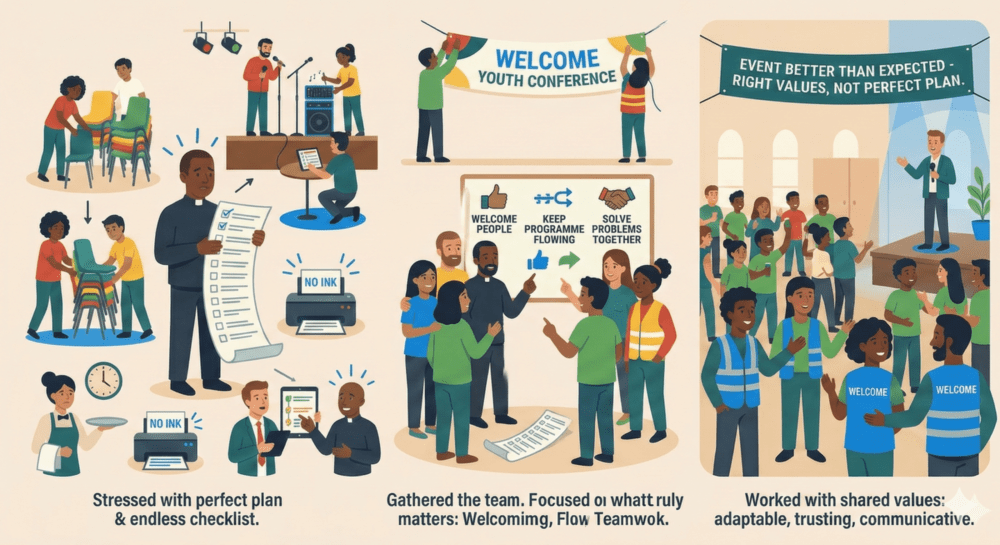
Imagine a pastor organising a big youth conference at a church in South London. Volunteers are everywhere. One group is sorting chairs. Another is testing microphones. Someone is decorating the hall. At first, the pastor tries to control everything with a long checklist. But things keep changing. The caterer is late. The printer runs out of ink. A guest speaker wants to switch time slots. So the pastor gathers the team. They agree to focus on what truly matters: welcoming people, keeping the programme flowing, and solving problems together. They stop bothering about the perfect plan. They talk more. They adjust quickly. They trust each other. The event turns out better than expected — not because everything went perfectly, but because the team worked with the right values.
2. What This Means in Agile
Agile values and principles work exactly like that church team. They guide how you think, how you work, and how you treat people. Agile isn’t about tools or fancy software. It’s about mindset. It’s about choosing people over paperwork, progress over perfection, and collaboration over control. When you understand the values, everything else in Agile becomes easier.
3. The Simple Explanation
Agile has four values and twelve principles. Here’s the simplest way to understand them.
The Four Agile Values (explained like you’re 12)
- People over processes — talking to each other solves problems faster than long documents.
- Working results over long plans — it’s better to deliver something small that works than a big plan that never ends.
- Collaboration over negotiation — work with your customer, not against them.
- Responding to change over sticking to a plan — change is normal, so adjust instead of stressing.
The Twelve Principles (in plain English)
- Make the customer happy with useful results.
- Welcome change, even late in the project.
- Deliver work in small, steady steps.
- Work together daily.
- Build projects around motivated people.
- Talk face‑to‑face when possible.
- Working results are the main measure of progress.
- Keep a sustainable pace — no burnout.
- Pay attention to good quality and good design.
- Keep things simple.
- Let teams organise and manage themselves – No Boss!
- Reflect often and improve.
Agile principles are like good life habits — simple, practical, and powerful.
4. Real Workplace Example
Imagine you’re working in a digital team at a local council in Manchester. The team is building a new online form for residents. Instead of writing a huge plan, they create a small version first. They show it to residents. They listen. They improve it. When a new requirement comes in, they don’t panic. They adjust. They talk daily. They solve problems together. They focus on delivering something useful every two weeks. This is Agile values in action — collaboration, communication, flexibility, and steady delivery.
5. Your Turn (Activity)
Take a sheet of paper. Write the four Agile values at the top. Under each one, write one example from your own life where you already behave that way. For example:
- “People over processes” → “I talk to my kids directly instead of writing long instructions.”
- “Responding to change” → “When plans change, I adjust instead of giving up.”
This activity helps you see that Agile is not new to you. You’ve been doing it in real life for years.
6. One Thing to Remember
Agile values and principles are simply a smarter, kinder, more flexible way of working with people.